Thursday, May 15, 2025

Read-y or Not, Summer's Here!

The end of the school year is quickly approaching! This week was the final library book check-out for students, and all library books are due by Friday, May 23rd.

Now’s the time to start searching for any missing books—check under the bed, in the car, or on bookshelves at home.

While the Goodrich LRC will be closed for the summer, you can still access our digital library anytime through Destiny Discover and SORA on your Chromebooks.

I also encourage all students to participate in the Woodridge Public Library’s summer reading program! Today, a representative from the library visited Goodrich to introduce this year’s program: “Get a Clue, Guess Who?” Every classroom had the opportunity to attend the presentation and learn how to sign up, earn prizes, and take part in exciting events at the library.

Each classroom teacher received a flyer with all the important details for students to take home—so please check your child’s backpack for it. For additional information, you can also visit the library’s website: www.woodridgelibrary.org.

Happy summer and happy reading! 


Wednesday, May 14, 2025

Can You Find Perimeter?

 Do you know the difference between finding area and finding the perimeter of a shape?

Well, the third graders at Goodrich School sure do!  Especially when you let 

them practice by playing games!Since finding perimeter is adding all of the lengths of a shape,

we played a gameCalled Fence Me In. Partners were given a pair of dice and a gameboard 

 One student rolled the dice and those 2 numbers became the sides of their shape.

  Both students determined the perimeters and drew the shape on the 

gameboard grid. The winner was the student with the highest perimeters at the end of math.


The second game we played was Treasure Map.  Students were given a grid with

 quadrilaterals on them labeled with a letter.  Students drew a letter card, found their 

shape on the treasure map and then had to determine the perimeter. The student with the

 higher perimeter at the end of math was the winner.


However, we are all winners because we know how to find perimeter!


Tuesday, May 13, 2025

Prosthetic Possibilities: Where Science Meets Imagination

In my 3rd and 4th grade classroom, students are putting their creativity, collaboration, and problem-solving skills to work. As part of our unit on body systems, we’ve been diving deep into how the skeletal and muscular systems function — and how they support movement and everyday activity.

To bring this learning to life, students are working through a design thinking challenge focused on prosthetic devices. Their goal is to create thoughtful, useful designs that improve the lives of individuals who use prosthetics in real-world situations.

Students are using the design thinking steps to complete this challenge. They started by identifying a problem. 

Each student group was given one of the following unique scenarios to design for:

  • Person A – Needs a prosthetic for their lower arm and loves rock climbing

  • Person B – Needs a prosthetic foot and has two large dogs they walk regularly

  • Person C – Needs a prosthetic hand and enjoys fishing with their grandpa

  • Person D – Needs a prosthetic for their lower leg and enjoys bike rides with siblings.

Students then researched prosthetics and the activity related to the problem. They practiced empathy by imagining themselves in the shoes of someone using a prosthetic. Moving forward, students generated creative ideas, evaluated options, and began building their designs. This challenge scenario encouraged students to think deeply about function, comfort, movement, and adaptability, all while considering the person behind the need. 

I've included their sketch designs below, but they can't wait to begin building their prototypes!

A snap on that goes on the prosthetic. It is grippy so that I won't slide off of the rocks. 

Magnetized foot and pedals.  


A robot hand and it has an auto realer and a retractable rod. 

A movement tracking, retractable leash. It will stop if the dog goes too fast. 

Monday, May 12, 2025

Butterflies in Preschool

 Butterflies in Preschool

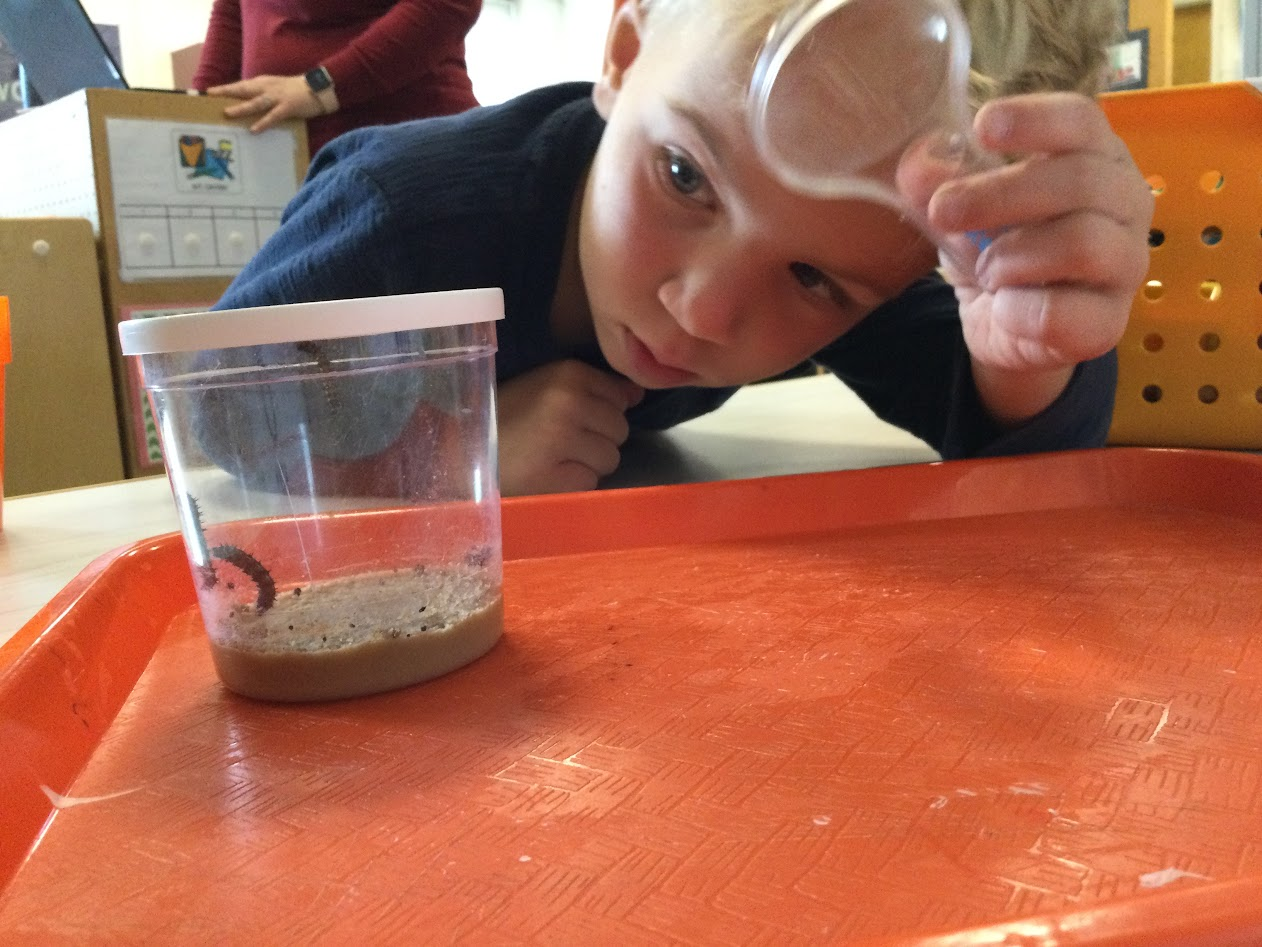
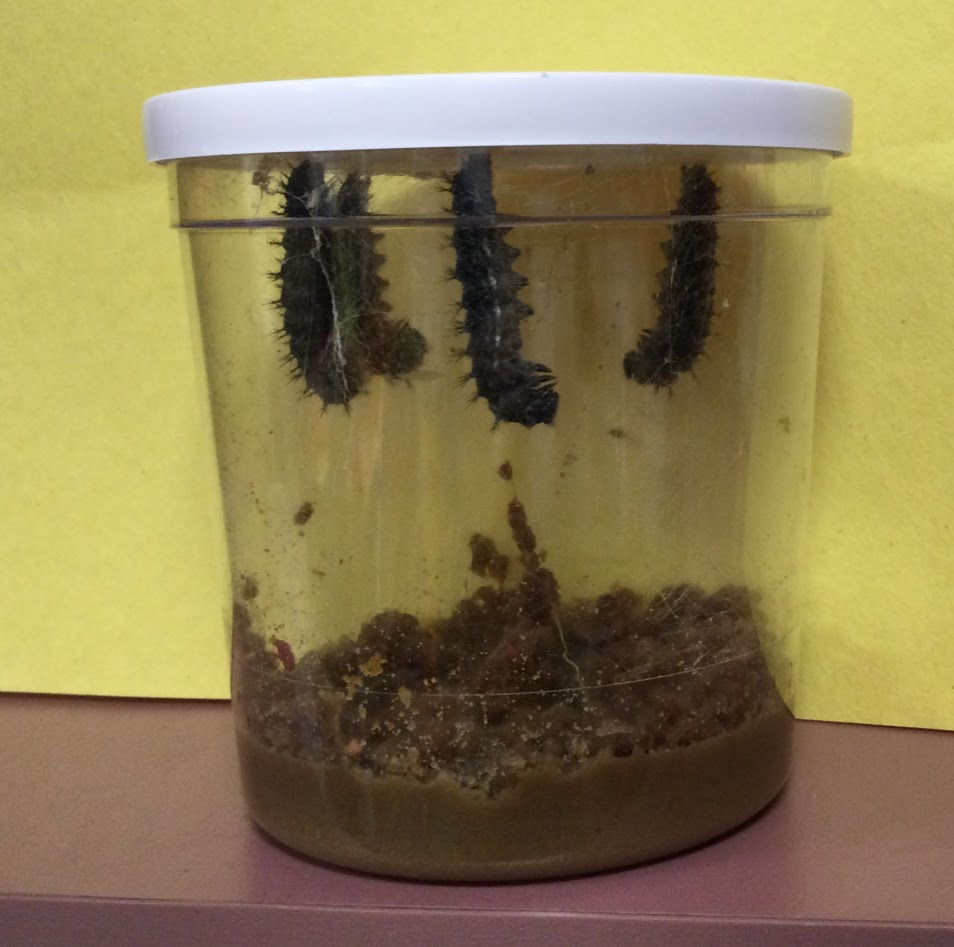
Ms. Kilkenny’s Early Childhood Preschool class has been busy this month.  We have been raising caterpillars!  Who knew they were so fuzzy? How many legs do they have?


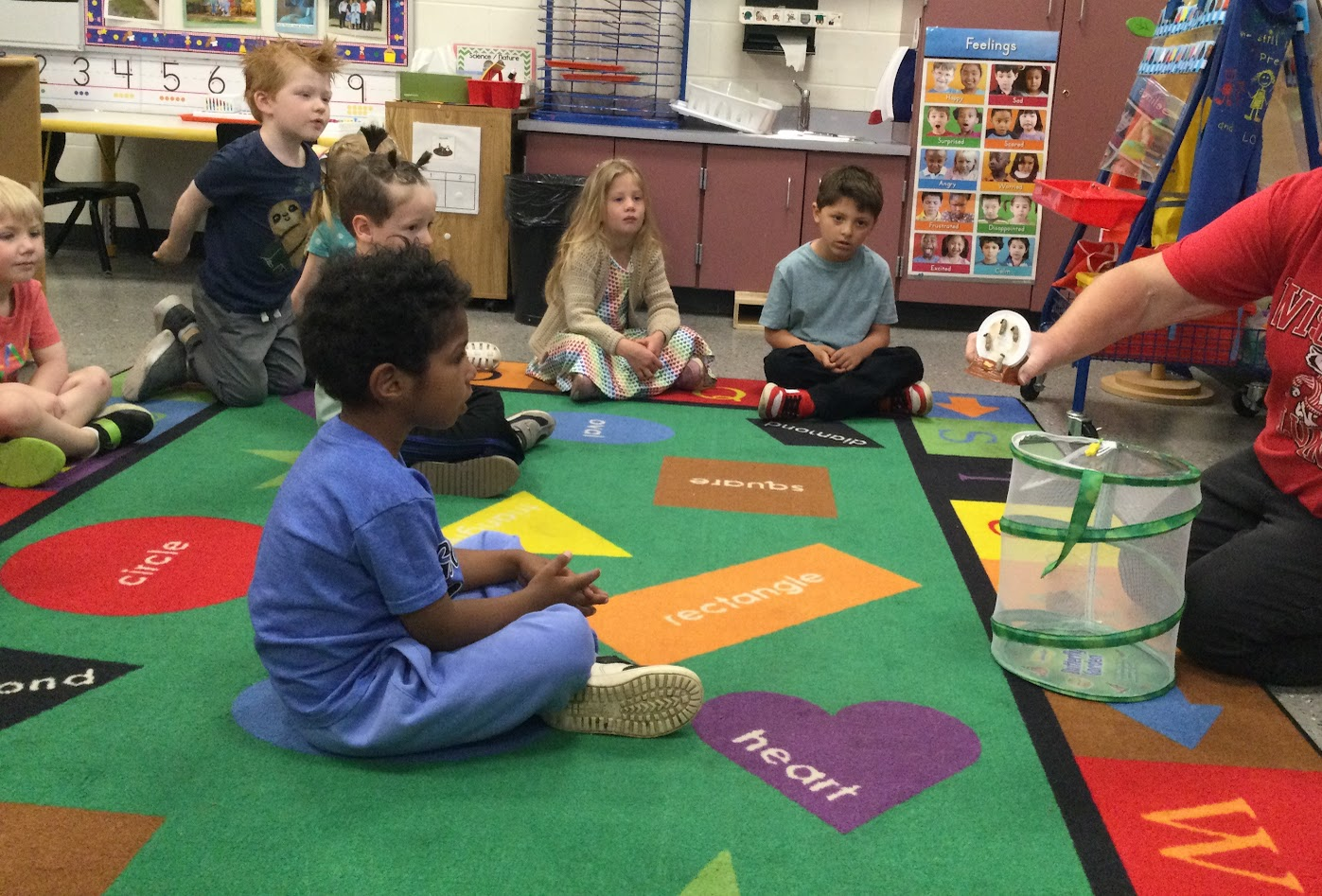
We learned that caterpillars that turn into butterflies make a chrysalis, not a cocoon.


We transferred them to their new habitat.


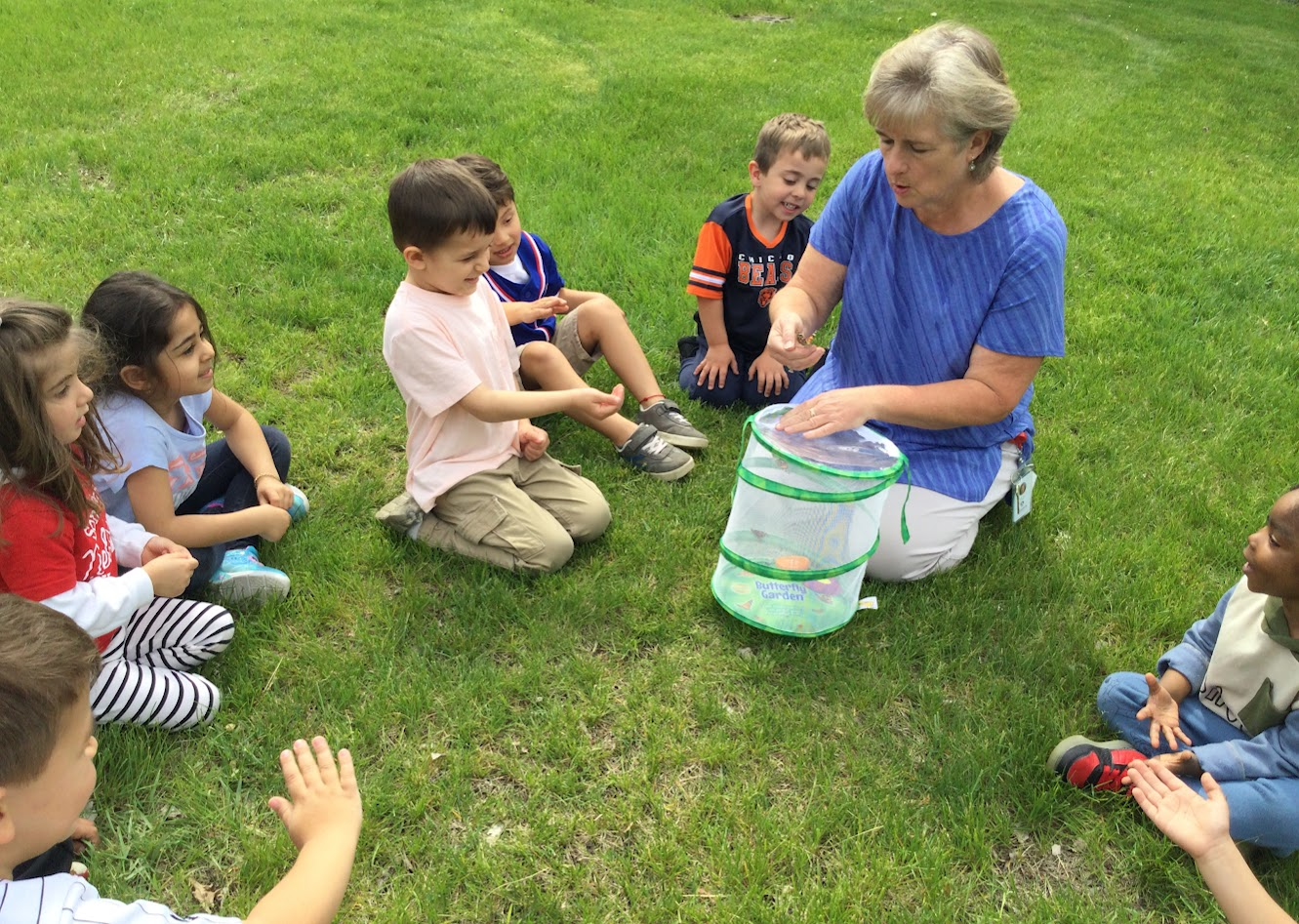
We waited patiently until the Painted Lady butterflies emerged from their chrysalis.  We released them on a beautiful Spring day.


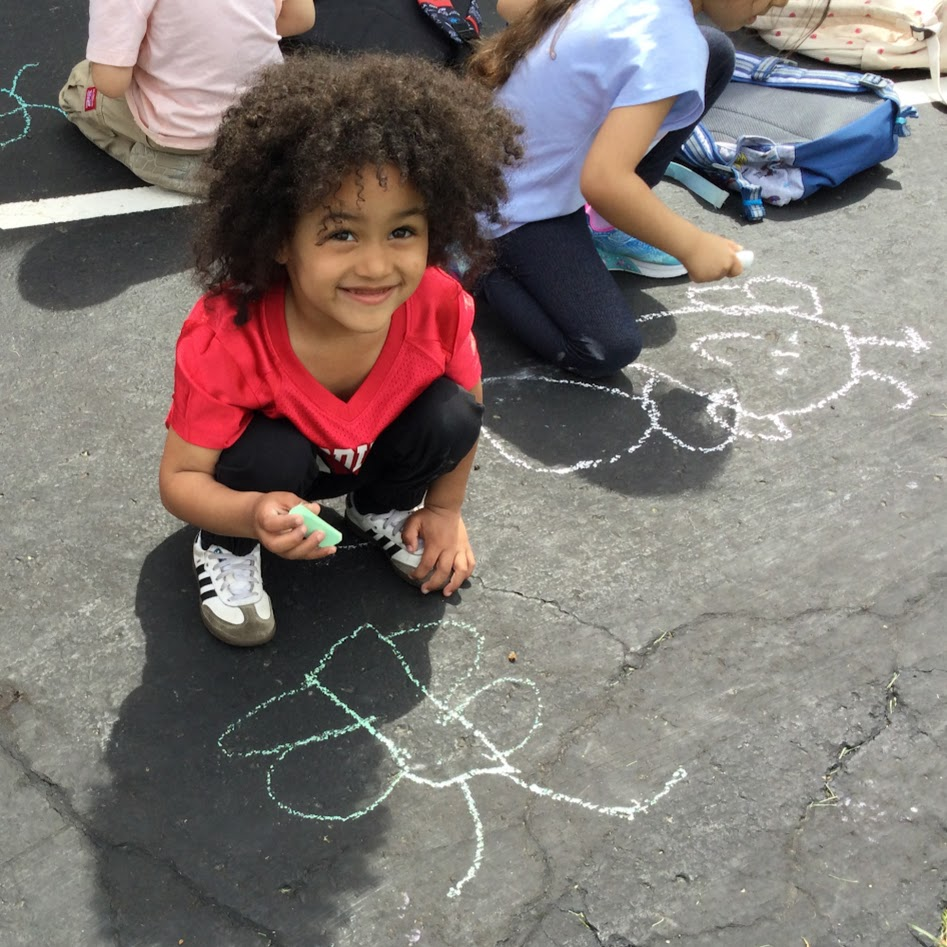
We learned how to draw butterflies with sidewalk chalk.


Friday, May 9, 2025

One School One Book

    Goodrich is currently participating in One School One Book, and everyone in our school community is reading A Boy Called Bat by: Elana K. Arnold. There are so many fun activities to come still as this book unfolds, but here is a glimpse into what we've done so far!

Mystery Reader

Different staff members recorded themselves reading the chapters for students to listen to. Each day, the students get to guess whose voice it is. To be determined if we have been right!

Bingo

Each day, a class question is asked. As a group, we decide on the correct answer for the reading that needed to be completed the night before. We are still waiting to get our Bingo, but hope it's coming soon!


Individual Trivia Questions

Each day, an individual question is asked from the assigned chapters, and a winner from each grade level is called over the announcements for responding correctly the day before. My class has had two winners so far!


    We are LOVING this book so far. There are more activities to come, but this is what we've experienced so far. Goodrich participated in One School One Book a few years ago, and I'm very glad to see it made a comeback. I love getting to engage in book groups/conversations with kids and other staff members. Stay tuned to see how this wraps up at the end of next week!

Thursday, May 8, 2025

Black History Research

With Black History as the focal point of our Social Studies integration to our ELA nonfiction unit, students have been exploring the lives of impactful Black historical figures and doing so in meaningful, creative, and tech-savvy ways.

We began the unit by introducing students to a wide range of influential Black leaders, thinkers, and artists. After this initial exploration, each student selected one figure to study more deeply. To ensure a broad range of stories and perspectives, no two students could research the same person.

One of the most exciting parts of this unit has been the use of SchoolAI’s chatbot. Students engaged in conversations with chatbots that acted as if they were the historical figures themselves. These interactions helped students build background knowledge and spark curiosity. But we didn’t stop there. Students were then tasked with verifying the chatbot information and conducting deeper research using reliable sources to build a more accurate picture of their chosen person.


With their research complete, students selected a digital platform to share everything they learned. The choices and creativity have been incredible! Projects include interactive timelines, digital magazine articles, e-books, podcast-style interviews, and even virtual museum exhibits. These products reflect not only what students have learned, but how they’ve chosen to express that learning in unique, student-driven ways.

Students are now in the final stages of preparing their digital projects, and next week, they’ll present their work to their classmates. This will give everyone the chance to explore a variety of historical figures and celebrate the power of nonfiction reading and research.

Tuesday, May 6, 2025

Becoming Digital Authors

We've been diving deep into the fascinating world of animals during our informational writing unit! Each student has become a super researcher, choosing an animal classification like mammals, reptiles, or birds. Then, they embarked on exciting explorations to learn all about three different animals within their chosen group. We used folders to create research notebooks so they could use notecards to store their research. That helped students stay organized with the research, so when they transferred it to the writing it was structured! It's been wonderful seeing their curiosity bloom as they uncover incredible facts and details about these creatures.

But the learning doesn't stop at just writing. We're also becoming digital book creators using Book Creator. This fantastic tool allows the students to bring their research essays to life with colorful pictures, interesting layouts, and even their own drawings. It's been such a joy to watch their creativity shine as they design their very own informational books. Get ready to be amazed by the wonderful work our third graders are producing – they are becoming true experts and authors! Below are some sneak peeks of these digital books via Book Creator!


Monday, May 5, 2025

Step Inside Asia

In our most recent reading unit, we’ve been diving into the geography and cultures of Asia, and not just the countries students usually hear about like China, Japan, or India. We wanted to make sure we were giving representation to all parts of Asia, highlighting its incredible diversity. Along the way, we’ve had some great conversations about stereotypes and how picture books can help challenge those by sharing more authentic and varied stories.

One of my favorite parts of the unit was using the thinking routine Step Inside. Students were asked to "step inside" the life of someone from Asia and consider what that person might see, care deeply about, believe, and wonder. It was amazing to watch students shift their thinking and show empathy through their reflections. They really embraced the opportunity to see the world through someone else’s eyes. They weren’t just learning about faraway places; they were connecting, imagining, and thinking deeply. 

Now that the students have built background knowledge on Asia and its people, we are going to explore how Marvel has helped represent Asian culture in mainsteam media.         


Thursday, May 1, 2025

Student Travels & Aerodynamics

One of the best part of having students that travel the world is the experiences and knowledge that they are able to share with their peers.  One of our classmates traveled to Hong Kong and Japan, another traveled to Mexico.  Yet another traveled to India.  These students shared the differences in geograpy, climate, food and interestingly enough, money!  Students were fascinated by how currency looks in other countries.  So we picked a day and kids brought in coins from their travels.  We had rich conversations about the physical attributes of the coins and the value of the coins in comparison to American currency.  All coins were returned home safely!


The end of the school year is upon us and this week students had a blast on F day - Flying Paper Airplanes.  Students watched videos on how to make airplanes and why they work.  Students had fun at the end of the day testing the aerodynamics of the paper airplanes.


Tuesday, April 29, 2025

Discovering Asia Using Pairs Share

 This month, our class has been diving into an exciting reading unit centered around Asia and the rich contributions of Asian American and Pacific Islander (AAPI) communities. As part of our commitment to broadening students' global awareness and cultural understanding, we’ve been exploring mentor texts that highlight both the history and geography of Asia, as well as stories that reflect the diverse voices and experiences of AAPI individuals.

One of the highlights of our unit has been an engaging activity where students became researchers and teachers! Using our mentor texts, students searched for key information about Asia’s vast history and geographical features. They focused on topics such as major religions, unique landscapes, historical trade routes like the Silk Road, and powerful empires that shaped the continent.

To help organize their thinking, students used tree maps—a visual tool that helps sort and categorize information. This graphic organizer allowed them to break down complex topics into manageable sections, encouraging deeper comprehension and critical thinking.

After gathering their information, students practiced the Kagan cooperative learning structure “Pairs Share.”

This strategy gave each child a chance to teach their partner about what they learned, reinforcing their understanding and building communication skills in the process.

It was incredible to see students so engaged as they taught one another about the Great Wall of China, the spread of Buddhism, the geography of the Himalayan region, and much more. Not only are they growing as readers, but they are also developing as informed, curious global citizens.